

American English: Built on Varbase, the AI-Powered Drupal CMS
- U.S. Department of State program, delivered in under 12 weeks
- 100 accessibility score: Section 508, ADA, WCAG AA
- Load times cut from ~10 seconds to ~1 second worldwide
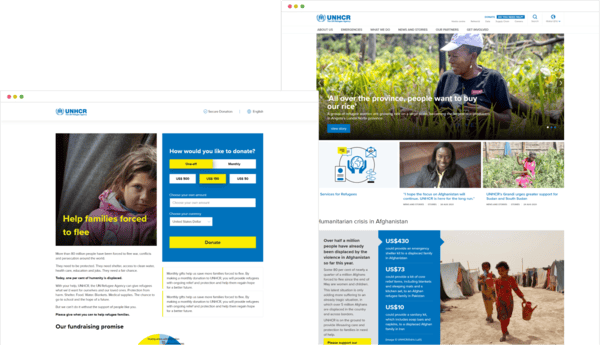
Your company has an AI strategy. We connect your Drupal platform to it: agent-ready publishing through MCP, assistants grounded in your content, and visibility in AI search. Trusted by UNHCR, Georgetown, and BCG.
Built for enterprises, NGOs, universities, and government agencies running Drupal at scale.
Drupal AI Initiative Gold Sponsor · Drupal Certified Diamond Partner · ISO 27001 & ISO 9001 Certified
A Drupal architect maps your first AI use case. No obligation.
Trusted by Enterprise Leaders Worldwide






Assistants answer from your content, synced the moment you publish, not yesterday's crawl
Brand and compliance guardrails, with human approval where it matters
Copilot, Claude, and your agents work with Drupal through MCP, an open standard
Structured so AI assistants like ChatGPT and Perplexity find, cite, and recommend you
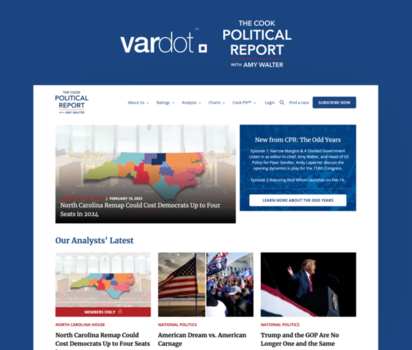
Vardot is a Gold Sponsor of the Drupal AI Initiative and maintains Varbase, the AI-powered enterprise Drupal CMS behind published builds like American English, a U.S. Department of State program.
Not AI for its own sake. Each service below answers a question an enterprise team has actually brought to us, with governance built in from the first workshop.
Connect Copilot, Claude, and your enterprise agents to Drupal through MCP: an agent drafts, checks brand guardrails, and publishes, with your team in approval.
Assistants that answer from your website's content and stay current: every publish syncs to the assistant's knowledge base, so answers never lag a day behind.
Search that understands intent and context, not just keywords, so visitors find the right page, document, or service on the first try.
Drafting, tagging, summarizing, and classification assisted by AI inside Drupal, with editors reviewing and approving before anything ships.
AI-assisted translation and adaptation inside Drupal's multilingual system, reviewed by humans, consistent across every locale you serve.
llms.txt, structured data (JSON-LD), and content structure that make AI assistants find, cite, and recommend your organization.
Our enterprise Drupal distribution with AI capabilities built in, powering published platforms including a U.S. Department of State program.
Approval workflows, brand rules, and compliance boundaries that decide what AI can do on your platform, and what stays with people.
LLMs & AI Readiness is one of the 14 categories in our ~100-point Drupal audit: know where you stand before you invest.
Not sure where AI fits your platform? Start with one pilot use case. Book My Free AI Consultation →
AI vendors are easy to find. Partners who run enterprise Drupal platforms for Fortune 500 companies, NGOs, universities, and government agencies, and who use AI agents in their own delivery every day, are not. We sell what we practice, and we say no to AI where it doesn't pay back.

Enterprise AI fails when it starts with a platform rebuild and a big promise. Ours starts with one use case your team can measure, on the Drupal platform you already run.
Every step has a human approval gate. Nothing publishes, answers, or translates without your rules deciding what needs review.
Book My Free AI Consultation →What's feasible on your platform, what's safe for your sector, and which use case pays back first. Grounded in our ~100-point audit framework.
A single workflow, agent-assisted publishing, a grounded assistant, or AI search, scoped small, measured honestly.
The pilot hardens into production: approval workflows, brand rules, and compliance boundaries configured before scale, not after.
Results reviewed against the baseline, then the next use case, with your team trained to own what's already live.
The AI layer is new. The engineering behind it isn't. Published, verifiable results from the platforms we run.
We felt like we were working with a true partner rather than a vendor.
I'm highly satisfied with Vardot, during the project work, the final product, and post-launch support and follow up.
Their resources are responsive and provide clarity in terms of timelines.




Yes, through MCP, the open standard enterprises are adopting for agent infrastructure. In practice: a marketer hands an agent a press release, the agent drafts it, checks it against your brand guardrails, and publishes it in Drupal, with a human approval step wherever your rules require one. If your company has appointed an AI lead and standardized on MCP, your website can join that infrastructure.
Usually, yes, because it's an architecture problem rather than an AI problem. An assistant that learns your website from a nightly crawl can be wrong for 24 hours at a time. We build publish-time sync instead: the moment content changes in Drupal, it updates the assistant's knowledge base, so answers stay current with your site.
Guardrails are configured before anything goes live: which actions AI can take, which content requires human approval, what brand and legal rules apply, and where the hard boundaries sit for your sector. In regulated environments, the approval workflow is the feature, not the compromise.
Our architectures use your content to ground your assistants' answers, which is separate from training a model on it. Data handling and training terms depend on the AI provider in your stack, and we configure and document those boundaries with your team as part of the build.
One workflow with a measurable baseline and low blast radius: agent-assisted publishing for one content type, a grounded assistant for one service area, or AI search on one section. The free consultation is where we map which pilot fits your platform and your sector's risk profile.
We can make you dramatically easier to find, cite, and recommend: llms.txt, JSON-LD structured data, and content structured the way AI assistants read it. No one can guarantee placement in a specific AI's answers, and you should be skeptical of anyone who promises it. What we build is the discoverability layer those answers draw from.
No. If you're on a supported Drupal version, AI capabilities integrate with the platform you already run. If you're on Drupal 7, 8, or 9, the migration comes first, and it's the natural moment to build the AI layer in rather than bolt it on later.
You do. Everything is built on open-source Drupal, and 100% of custom code, content, and configuration is yours. If you ever move on, we hand over the full source unencrypted and unminified, with documentation and knowledge transfer. No vendor lock-in.
Take the free 20-question scorecard and get your score across 5 areas: content structure, discoverability, connectivity, governance, and platform health, plus a prioritized fix list. No call required.
Take the AI Readiness Scorecard →Tell us about your platform and a Drupal architect will map your first AI use case: what's feasible, what's safe for your sector, and what it takes to ship a pilot your team can measure.