

American English
- Drupal 7 to 11, first phase live in under 12 weeks
- 100 on automated WCAG accessibility checks
- Load times down from 8 to 10 seconds to about 1 second
We add AI to your Drupal platform: assistants that answer from your own content, AI search, AI-assisted editing, and a way for tools like Microsoft Copilot and Claude to draft and publish with your approval. Book a free call to choose your first use case.
Map your first AI use case with a Drupal architect.
Selected clients






Six ways to put AI to work on your Drupal site.
Let tools like Microsoft Copilot or Claude draft content, check it against your brand rules, and publish it in Drupal after a person approves. This runs on MCP, an open standard for connecting AI tools to other software.
A chat assistant that answers from your own pages and documents. It updates when you publish, so its answers match your site.
Search that matches what visitors mean, even when their words differ from yours, so they reach the right page, document, or service faster.
Drafting, tagging, summaries, and translation inside the Drupal editor. Editors review everything before it goes live.
Structured data, an llms.txt file that tells AI tools what your site covers, and page structure that helps ChatGPT, Perplexity, and Google AI Overviews understand and cite you.
AI readiness is one of 14 categories in our 100-point Drupal audit, so you know what to fix before you invest.
Not sure which one fits? We'll work it out on the call.
Book a free AI consultationWhat we set up before any AI feature goes live.
Assistants and search draw on your published content and update when it changes.
You decide which AI actions need a person to approve them, content type by content type.
We document what each AI provider can see and whether it may train on your data, then configure it with your team.
MCP and open-source Drupal mean switching AI providers doesn't require rebuilding your site.
With one measurable use case, on the Drupal platform you already run.
We review your platform and content, check what's safe for your sector, and pick the use case most likely to pay back first.
One workflow, scoped small, with a baseline so results can be measured.
Approval workflows, brand rules, and data boundaries are set up before rollout.
We compare results to the baseline and plan the next use case. Your team is trained to run what's live.
Vardot is a Gold Sponsor of the Drupal AI Initiative and a top 20 Drupal contributor.
Our engineers build with AI agents every day. We recommend what we've seen work, and we tell you when AI isn't worth it for a use case.
We've built and supported Drupal platforms for UN agencies, universities, newsrooms, and global companies since 2011.
Varbase, our open-source Drupal distribution, includes AI tools for content, images, and automation. American English runs on it.
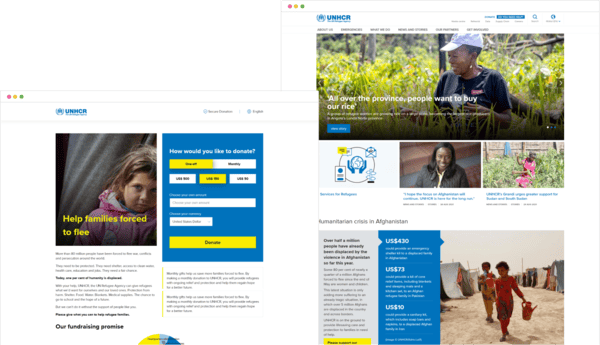
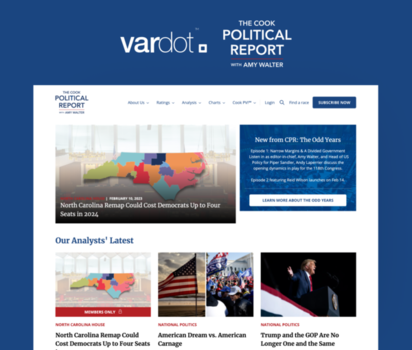
Drupal platforms we built and support. American English runs on Varbase, our AI-powered Drupal distribution.
We felt like we were working with a true partner rather than a vendor.
I'm highly satisfied with Vardot, during the project work, the final product, and post-launch support and follow up.
Their resources are responsive and provide clarity in terms of timelines.





Anything else, ask on the call.
Yes. We connect them through MCP (Model Context Protocol), an open standard for letting AI tools work with other software. A typical flow: someone gives the agent a press release, the agent drafts a Drupal page, checks it against your brand rules, and sends it for approval before it publishes.
Often, yes. Many chatbots learn a website from a scheduled crawl, so they fall behind whenever content changes. We connect the assistant to Drupal directly, so when content is published or updated, the assistant's knowledge updates too.
We set the rules before anything goes live: what AI can do, which content needs human approval, which brand and legal rules apply, and what is off limits for your sector.
Using your content to ground an assistant's answers is separate from training a model on it. Training and data-handling terms depend on the AI provider you use. We document and configure those boundaries with your team as part of the build.
One workflow with a clear before-and-after measure and limited risk if something goes wrong. For example: AI-assisted publishing for one content type, an assistant for one service area, or AI search on one section of the site.
It depends on the use case and your approval process. After the consultation, you get a scope and plan with a timeline for the pilot, before you commit to anything.
We can make your content easier for AI tools to find, understand, and cite, using structured data, llms.txt, and clear page structure. No one can guarantee how a specific AI tool answers, so be cautious of anyone who promises placement.
No. On Drupal 10 or 11, AI features connect to the site you have. On Drupal 7, 8, or 9, we migrate first and build the AI features into the new platform as part of that work.
You do. It's built on open-source Drupal, and all custom code, content, and configuration is yours. If you move on, we hand over the full, readable source code with documentation and knowledge transfer.
Not ready for a call? See how our AI readiness assessment works and what it covers.
Tell us about your platform. A Drupal architect will map what's possible, what's safe for your sector, and what a measurable pilot would take.
Free, with no commitment.